
The basic anatomy of the cell
The cell is composed of many parts, each having a different function. The animal cell consists out of the following parts or organelles.
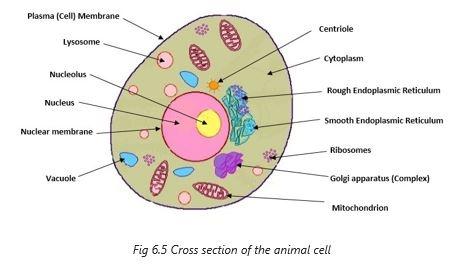
Cytoplasm – a jelly-like fluid, also called the cytosol that fills the cell membrane and surrounds the cell nucleus and other organelles.
Centriole – paired barrel-shaped organelles located in the cytoplasm of animal cells near the nuclear envelope. Centrioles play a role in organising microtubules that serve as the cell’s skeletal system. They help determine the locations of the nucleus and other organelles within the cell.
Endoplasmic reticulum – helps process molecules created by the cell. The endoplasmic reticulum is involved in molecule processing and transportation out of the cell.
Golgi apparatus – is involved in the packaging of molecules processed by the endoplasmic reticulum to be transported out of the cell.
Lysosome and peroxisomes – the recycling centre of the cell that digests foreign bacteria that invade the cell, rids the cell of toxic substances, and recycles worn-out cell components.
Mitochondria – complex organelles that convert energy from food to a form that the cell can use. The mitochondria have their own genetic material, separate from the Nucleus DNA (mitochondrial DNA or mtDNA) that enable the mitochondria to make copies of itself.
Nucleus – the cells command centre, instructing the cell to grow, mature, divide, or die. It also houses DNA (deoxyribonucleic acid), the cell’s hereditary material. The nucleus is surrounded by a membrane called the nuclear envelope, which protects the DNA and separates the nucleus from the rest of the cell.
Nucleolus – a region found within the cell nucleus that is concerned with producing and assembling the cell’s ribosomes. Following assembly, ribosomes are transported to the cell cytoplasm where they serve as the sites for protein synthesis.
Plasma membrane – the outer lining of the cell that separates the cell from its environment and allows materials to enter and leave.
Ribosomes – organelles that process the cells’ genetic instructions to create proteins. These organelles can float freely in the cytoplasm or be connected to the endoplasmic reticulum.
Vacuole – a membrane-bound organelle that helps to isolate waste products.